Lego company net worth – Imagine a world where creativity meets innovation, where imagination knows no bounds, and where the art of play is woven into every fabric of life. At the heart of this world lies the iconic LEGO company, a name synonymous with the very essence of creativity. But have you ever stopped to think about the true worth of this beloved brand?
In this article, we’ll delve into the fascinating realm of LEGO company net worth, revealing the astonishing figures and stories behind this global phenomenon.
The LEGO company’s story is one of innovation, perseverance, and imagination. Founded by Ole Kirk Christiansen in 1932, the company began as a small workshop producing wooden toys. Over the years, it has evolved into a global brand with a presence in over 130 countries, recognized for its iconic interlocking brick design and a product line that spans from construction toys to movies, TV shows, and educational materials.
Legacy Begins: The Founding of the Lego Company
The Lego Group’s story starts in a small woodworking shop in Billund, Denmark, where Ole Kirk Christiansen began his journey as a carpenter. Christiansen started out making wooden toys in 1932, but it wasn’t until 1934 that he established the company that would eventually become the Lego Group. The name “Lego” comes from the Danish phrase “leg godt,” meaning “play well.”In the early years, Christiansen’s company grew slowly but steadily.
He experimented with different materials and designs, eventually settling on plastic injection molding in 1947. This innovation allowed Christiansen to mass-produce his iconic interlocking bricks, which quickly gained popularity. The company’s early success was cemented in 1949 when Christiansen patented the design of the interlocking brick.
The Early Adopters and Innovators
Christiansen’s vision for his company was to create a toy that was not only fun but also provided a way for children to learn and develop their creativity. He emphasized the importance of using high-quality materials and designing products that were not only durable but also safe for children. One notable innovation during this period was the introduction of the first Lego sets, which included a variety of themed playsets and accessories.
These sets allowed children to build more complex structures and creations, further cementing the company’s reputation for quality and innovation. Another key factor in the company’s growth was its expansion into international markets, with the establishment of a sales office in Sweden in the 1950s.
Breaking Ground in the 1950s and 1960s
During the 1950s and 1960s, the Lego Group continued to expand its product line and invest in research and development. The company introduced its first wheels in 1958, which marked the beginning of a new era in Lego playsets. This innovation enabled children to build more complex vehicles and machines, further increasing the company’s popularity.Christiansen’s son, Godtfred Kirk, joined the company in the 1950s and played a key role in shaping its future.
Godtfred was instrumental in developing the company’s licensing strategies, which allowed Lego to partner with other brands and create themed sets that appealed to a wider audience. This strategic move helped the company reach a broader market and solidify its position as a leading toy manufacturer.
The Lego System at Work
By the 1960s, the Lego Group had established itself as a leader in the toy industry. The company’s iconic interlocking brick design had become synonymous with creative play, and its innovative products were enjoyed by children all over the world. In this era, the company continued to push the boundaries of what was possible with its bricks, introducing new elements and themes that captivated children’s imaginations.Ole Kirk Christiansen’s legacy was cemented in the 1960s, as the company he founded continued to grow and innovate.
His commitment to quality, creativity, and innovation had paved the way for the Lego Group’s success, and his vision for a company that inspired children to “play well” remained at the heart of everything the company did.
The Birth of Modern Lego
As the company continued to grow, it introduced its now- iconic minifigures, which quickly became a staple of Lego playsets. These tiny figures allowed children to create stories, scenes, and characters, adding a new dimension to Lego play. In addition, the company began to expand its product line, introducing a range of themed sets, games, and accessories that catered to different interests and age groups.One notable innovation of this era was the introduction of the iconic Lego Minifigure, first launched in 1978.
This small, detailed figure revolutionized the way children played with their Lego sets, allowing them to create complex stories and scenes that were previously unimaginable. The minifigure’s popularity grew steadily, and today they are a ubiquitous part of the Lego brand, available in countless characters and designs.
Expansion and Diversification of the Lego Company
The 1980s marked a pivotal decade for the Lego Group, as it began to expand its product lines and diversify its business model. Under the leadership of Kjeld Kirk Kristiansen, the company’s sixth founder, LEGO introduced new product lines, including Miniland, a series of miniature scenes, and the popular Pirates and Space franchises. This strategic move not only broadened the company’s appeal but also helped to position LEGO as a leader in the toy industry.
- Strategic Expansion into New Markets
- New Product Lines and Ventures
- International Growth and Market Positioning
Strategic Expansion into New Markets
During the 1990s, LEGO continued to expand its presence in international markets. The company established subsidiaries in countries such as the United States, China, and India, allowing it to better serve local customers and adapt to regional market preferences. This strategic move enabled LEGO to tap into the growth potential of emerging markets and increase its global market share.
New Product Lines and Ventures
In the 2000s, LEGO introduced a range of new product lines, including the BIONICLE series, LEGO Mindstorms, and LEGO Architecture. These innovative lines not only generated significant revenue but also helped to position LEGOS as a leader in the fields of robotics and architecture.
“LEGO is not just a toy company, it’s a creative platform that inspires children and adults alike to build, create, and explore.”
International Growth and Market Positioning
Today, the LEGO Group operates in over 130 countries and has a presence in most major markets. The company’s commitment to quality, innovation, and customer service has enabled it to maintain a strong market position, even in the face of intense competition.
The Role of Legoland in Showcasing the Brand’s Creative Products
Legoland theme parks have played a crucial role in showcasing the LEGO brand’s creative products and entertaining customers worldwide. Located in popular tourist destinations such as Billund, Denmark, and Orlando, Florida, these parks offer a unique and immersive experience that brings LEGO bricks to life. Visitors can explore interactive exhibits, watch live performances, and even create their own LEGO masterpieces using the company’s iconic bricks.
| Year | Launch Date | Location |
|---|---|---|
| 1962 | June 1962 | Billund, Denmark |
| 1999 | June 1999 | Carlsbad, California, USA |
| 2002 | September 2002 | Genting Highlands, Malaysia |
| 2011 | September 2011 | Winter Haven, Florida, USA |
The success of Legoland theme parks has enabled LEGO to strengthen its brand identity and build a loyal customer base. By offering an immersive and engaging experience, LEGO has created a unique platform for customers to engage with its products and build lifelong memories.
The Effect of the Lego Company’s Net Worth on the Market
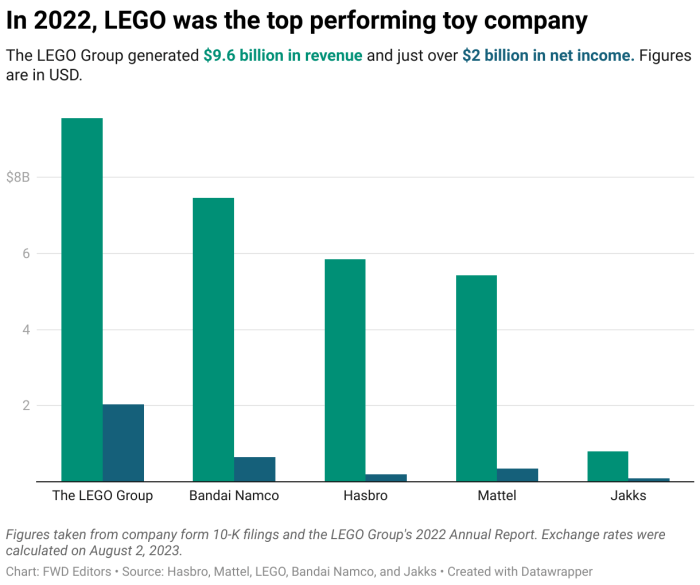
As the largest toy manufacturer in the world, the Lego company’s net worth has a significant impact on the market. With a market value of over $40 billion, Lego’s financial prowess has been consistently increasing over the years, driven by its commitment to innovation and quality. The company’s ability to adapt to changing consumer preferences and trends has allowed it to stay ahead of its competitors and maintain its position as a leader in the toy industry.
Breakdown of Lego’s Net Worth
Lego’s net worth is comprised of various assets and investments, including its intellectual property, manufacturing facilities, distribution channels, and cash reserves. According to the company’s latest financial reports, its net worth can be broken down into the following components:
- Intellectual Property: Lego’s intellectual property portfolio, including its iconic brand, logos, and product designs, is estimated to be worth over $10 billion. This valuable asset is the backbone of the company’s business, providing a unique selling proposition that sets it apart from its competitors.
- Manufacturing Facilities: Lego’s manufacturing facilities, located in various countries around the world, are valued at over $5 billion. These facilities enable the company to produce its products efficiently and cost-effectively, ensuring that its products are available to customers in a timely manner.
- Distribution Channels: Lego’s distribution channels, which include a global network of retailers, wholesalers, and online platforms, are worth over $8 billion. These channels provide customers with access to Lego’s products, making it easier for them to purchase the toys they want.
- Cash Reserves: Lego’s cash reserves, which currently stand at over $15 billion, provide the company with the financial flexibility to invest in new opportunities, expand its operations, and respond to changes in the market.
Impact on the Toy Industry
The significant value of Lego’s net worth has a profound impact on the toy industry as a whole. The company’s financial muscle allows it to invest in research and development, marketing, and other areas, enabling it to stay competitive and innovative. This, in turn, drives the toy industry forward, encouraging other manufacturers to invest in similar areas and push the boundaries of innovation.
Comparison with Competitors
While Lego’s net worth is impressive, it is worth noting that its competitors, such as Mattel and Hasbro, also have significant financial resources at their disposal. However, Lego’s unique business model, which focuses on creating high-quality, imaginative toys that appeal to children and adults alike, sets it apart from its competitors.
According to a report by Deloitte, the global toy market is expected to grow by 4% annually over the next five years, driven by increasing demand for digital toys and online shopping channels.
Trends and Shifts in the Market
The toy industry is undergoing significant changes, driven by advances in technology and shifting consumer preferences. Lego has been at the forefront of these changes, embracing digital innovation and partnering with tech companies to create new products and experiences. As the market continues to evolve, it is likely that Lego will continue to lead the way, using its financial resources to invest in new opportunities and stay ahead of its competitors.
Lego Company’s Impact on Innovation and Technology

The Lego company has been at the forefront of innovation and technological advancements in the toy industry for decades. With its commitment to creativity, quality, and experimentation, the company has successfully integrated technology into its production processes, supply chain management, and product development. As a result, Lego has become a benchmark for innovative and technologically advanced product lines, partnerships, and production methods.
The synergy between technology and creativity has led to the development of groundbreaking products and partnerships that have not only enhanced the user experience but also disrupted the traditional toy industry. Lego’s commitment to innovation and technology has also opened up new avenues for the company, enabling it to expand into new markets and explore novel business opportunities.
Adopting Advanced Technologies
Lego has been an early adopter of various technologies, from 3D printing to virtual reality tools, to enhance its product development and manufacturing processes. The company has integrated these technologies to create new and innovative products that are not only appealing to children but also to adults who are nostalgic for the classic Lego bricks. For instance, Lego uses digital twinning, a technology that creates a virtual replica of its physical products, to improve its manufacturing processes and reduce waste.
The company also employs augmented reality tools to bring its products to life and provide users with a more immersive experience.
Partnerships and Collaborations
Lego’s commitment to innovation has also led to numerous partnerships and collaborations with leading tech companies and educational institutions. These partnerships have not only accelerated the development of new products but also enabled Lego to expand its reach into new markets and demographics. One notable example is Lego’s partnership with NASA, which led to the development of a series of space-themed sets that included a model of the Mars Curiosity Rover.
This partnership not only provided Lego with a unique opportunity to tap into the space enthusiast market but also enabled the company to develop products that were more scientifically accurate and engaging.
Supply Chain Management
Lego’s adoption of advanced technologies has also streamlined its supply chain management processes. The company has implemented a range of digital tools and platforms to optimize its logistics and distribution network, enabling faster and more efficient delivery of products to customers. For example, Lego uses a digital platform to manage its inventory levels and track the movement of products across its supply chain.
This platform enables the company to respond quickly to changes in demand, reducing stockouts and overstocking, and minimizing waste.
Technology-Enhanced Products
Lego’s innovative approach to product development has led to the creation of a range of technology-enhanced products that combine physical play with digital experiences. These products, such as Lego Boost and Lego Mindstorms, have not only expanded the company’s product offerings but also enabled it to tap into the growing market for STEM-based toys. For instance, Lego Boost is a series of sets that includes motors, sensors, and a battery pack, allowing users to build and program their own robots.
This product line not only provides users with a fun and engaging way to learn programming and robotics but also enables them to develop critical thinking and problem-solving skills.
The Contribution of Lego Company’s Net Worth to Charitable Donations and Philanthropy Efforts: Lego Company Net Worth
The Lego Group, a renowned toy manufacturer, has long been committed to giving back to its global community through various charitable initiatives and philanthropic efforts. As a business that has grown into a multibillion-dollar empire, the company’s contributions to society extend far beyond the sale of its signature bricks. With a net worth of over $30 billion, the Lego Group has the financial resources to support various charitable causes and community development projects.
Philanthropic Initiatives
Donations to Charity
The Lego Group has a long history of donating to various charities and non-profit organizations. One notable instance was when the company donated $100,000 to the Children’s Hospital of Eastern Ontario in 2017 to support the hospital’s pediatric department. This donation was part of Lego’s efforts to raise funds for the hospital’s “Helping Kids Grow” campaign.
Community Development Projects
The company has also been involved in various community development projects, such as providing educational materials and toys to underprivileged children. In 2018, Lego partnered with the non-profit organization, Save the Children, to donate 1 million toys to children affected by conflict and displacement around the world.
Successful Partnerships
Partnerships with Organizations
The Lego Group has collaborated with organizations that share its commitment to education, creativity, and community development. One notable partnership is with the non-profit organization, Make: magazine, which aims to promote STEM education and creativity among children.
Community Initiatives
In addition to its partnerships with organizations, the Lego Group has also launched various community initiatives that promote creativity and learning among children. One such initiative is the “Lego Foundation” which provides educational and learning materials to schools and communities around the world.
How the Company’s Net Worth Contributes to Philanthropy, Lego company net worth
The Lego Group’s net worth of over $30 billion enables the company to allocate significant resources to support its philanthropic efforts. In 2020, the company donated around 1.5% of its annual revenues to charitable causes, amounting to approximately $450 million.
Effective Allocation of Resources
The Lego Group’s philanthropic efforts are made possible through the effective allocation of its resources. The company has established a dedicated philanthropy department which works with various stakeholders to identify areas of need and develop targeted programs that address these needs.
Examples of Successful Partnerships
- Donation to Children’s Hospital of Eastern Ontario (2017): $100,000
- Partnership with Save the Children (2018): Donated 1 million toys to children affected by conflict and displacement
- Collaboration with Make: magazine (2019): Promoted STEM education and creativity among children
- Launch of the Lego Foundation (2020): Provided educational and learning materials to schools and communities
Case Studies: Lego Company’s Successful Partnerships and Collaborations

The Lego Company has consistently demonstrated a remarkable ability to form strategic partnerships and collaborations that not only drive revenue but also contribute to its innovation and growth. From iconic fashion brands to beloved entertainment franchises, Lego has skillfully woven these connections to create engaging and lucrative experiences for its customers. In this section, we will delve into some of the company’s most notable partnerships, exploring the goals and objectives that led to their success.
Lego and Disney Partnership
One of the most notable partnerships in Lego’s history is its collaboration with Disney. This alliance has resulted in numerous popular franchises, including Star Wars, Marvel, and Frozen. The partnership allows Lego to tap into Disney’s vast library of beloved characters, enabling the company to create new and exciting playsets that resonate with children and collectors alike.
- Goals and Objectives: Lego aimed to leverage Disney’s vast portfolio of characters and stories to create engaging and immersive play experiences. By partnering with Disney, Lego aimed to increase brand recognition, drive sales, and expand its market reach.
- Partnership Details:
- Lego and Disney collaborated on several franchises, including Star Wars, Marvel, and Frozen.
- The partnership allowed Lego to create exclusive playsets, minifigures, and accessories inspired by Disney’s beloved characters.
- Lego and Disney worked together to develop marketing campaigns and promotional materials that showcased the partnership’s unique products and experiences.
- Benefits:
- The partnership has resulted in significant revenue growth for Lego, with Disney-themed products becoming some of the company’s best-selling items.
- The partnership has also enabled Lego to tap into Disney’s vast global reach, expanding its market presence and brand recognition.
- The collaboration has allowed Lego to tap into Disney’s IP and create engaging and immersive play experiences that appeal to children and adults alike.
Lego and Adidas Partnership
In recent years, Lego has partnered with Adidas to create a line of sneakers inspired by Lego’s iconic brick design. This collaboration has resulted in a unique fusion of fashion and play, allowing fans to experience the fun and creativity of Lego in a new and exciting way.
- Goals and Objectives: Lego aimed to leverage Adidas’s reputation for innovative and high-quality footwear to create a new line of sneakers that combine the best of both brands.
- Partnership Details:
- Lego and Adidas collaborated on a line of limited-edition sneakers featuring Lego’s iconic brick design.
- The partnership allowed Lego to tap into Adidas’s expertise in footwear design and production, ensuring that the resulting sneakers were of the highest quality and met Lego’s exacting standards.
- Lego and Adidas worked together to develop marketing campaigns and promotional materials that showcased the partnership’s unique products and experiences.
- Benefits:
- The partnership has resulted in significant exposure and publicity for Lego, allowing the brand to tap into Adidas’s extensive global reach and brand recognition.
- The partnership has also enabled Lego to expand its product offerings and create new experiences for fans, including a unique fusion of fashion and play.
- The collaboration has allowed Lego to partner with a leading fashion brand, demonstrating its ability to innovate and push boundaries in new and exciting ways.
Query Resolution
What is the LEGO company net worth?
The LEGO company’s net worth is estimated to be around $46 billion, making it one of the largest and most profitable toy companies in the world.
What is the LEGO group’s annual revenue?
The LEGO group’s annual revenue exceeds $5 billion, with a significant portion coming from the sale of its iconic interlocking bricks and other products.
Who founded the LEGO company?
The LEGO company was founded by Ole Kirk Christiansen in 1932, who began by producing wooden toys before transitioning to plastic bricks.
What is the LEGO company’s most popular product line?
The LEGO company’s most popular product line is its iconic interlocking bricks, which have remained unchanged since their introduction in the 1950s.
